
Dolphin Acoustics at the Interface of Biology and Computer Science
A Vertically Integrated Project (VIP) at the University of St Andrews using expertise from biologists, computer scientists and statisticians to describe and compare dolphin whistles across populations.


Project overview
Dolphins are very vocal animals. They use different noises for different purposes, namely whistles and clicks. Dolphins use a variety of whistles to communicate with one another. Wouldn’t it be great to understand how different species communicate?
This is what we are trying to do in the Dolphin Acoustics VIP. We use passive acoustic recordings of dolphins communicating to learn about dolphin whistles. Using and creating new computer programmes, we graph, trace, and categorise different dolphin whistles to learn more about dolphin abundance, geographic distribution, behaviour, and interaction.
Currently, we are comparing different populations of Pseudorca crassidens (false killer whales) in Hawaii.
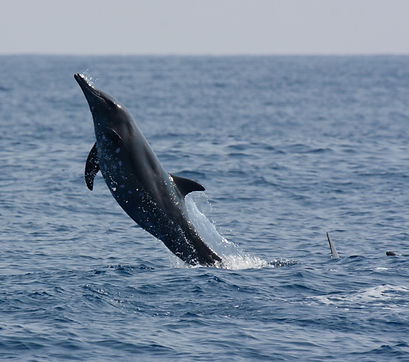
Last year, we compared populations of Steno bredanensis (rough-toothed dolphins) in the Mediterranean, South Atlantic and Tropical Pacific.
What is a Vertically Integrated Project?
Vertically Integrated Projects (VIPs) are research projects that engage students in long-term, large-scale, multidisciplinary research. They are so named because the team members span across year groups and degree levels, with undergraduate students working alongside graduate students and faculty.
VIP programmes offer students an invaluable opportunity to take part in real-world impactful research early on in their careers, developing their disciplinary, leadership and teamwork skills. Taking part in a VIP has been shown to increase graduation and post-graduation job placement rates.
Implemented in 50 institutions, across 14 countries, and 6 continents, VIP programmes connect every student to a global network that is constantly expanding.

Aims
-
Evaluate existing AI and other methods for detecting, extracting measurements from and classifying sounds produced by dolphins in passive acoustic recordings
-
Explore new machine-learning methods for extracting sounds from raw data and classifying them
-
Develop and implement improved species classifiers using both the improved and existing extraction methods
-
Describe acoustic repertoires of different dolphin species and compare them across species and geographic areas

Importance
Developing methods to accurately classify whistles from passive acoustic recordings is essential for monitoring and conserving cetacean species. As climate change and anthropogenic activity are endangering more species, this is becoming increasingly important.
Defining whistle repertoires also has important implications for better understanding dolphin behaviour and communication and studying how this changes between populations and species.
News & Events


